Building the Connected Patrol Vehicle: Why Public Safety Technology Can’t Be Planned One Device at a Time
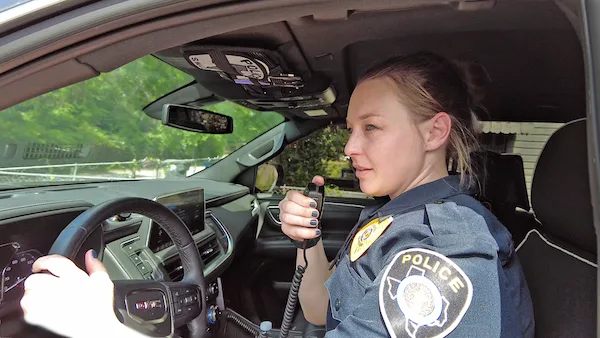
A modern patrol vehicle can carry an extraordinary amount of technology.
There’s the Mobile Data Terminal officers use to access CAD and records. The radio connects them with dispatch and other responders. In-car and body-worn cameras capture evidence. A vehicle router keeps systems connected to applications and information outside the vehicle.
Each technology has an important job to do. But an agency can select excellent equipment and still end up with a vehicle that doesn’t work particularly well for the officer using it.
The issue is rarely the individual device. It’s what happens when everything comes together.
How equipment is mounted affects how easily officers can use it. Network capacity affects how quickly data and video can move. Adding a new system can create demands on power, connectivity, antennas, wiring, and available space. An upgrade to one technology may affect several others.
That’s why PMC approaches the patrol vehicle as a connected technology system, with each component considered as part of the larger environment.
Start With the Officer, Not the Equipment List
It’s easy for a vehicle technology project to become a list of products.
An MDT. A router. A radio. Cameras. A keyboard. Mounts. Antennas.
But officers don’t experience those technologies as a list. They experience them together, inside a confined workspace, during an eight-, ten-, or twelve-hour shift.
They need to see the MDT without obstructing their view. They need to reach controls without awkward movement. They need to communicate while accessing information and responding to what is happening around them. Equipment needs to be secure without making the vehicle difficult to enter, exit, or operate.
Planning around the officer’s workflow helps determine where technology belongs and how the complete environment should function.
Connectivity Has Become Part of Almost Everything
As more public safety applications move to the cloud, reliable connectivity affects far more than the MDT.
In-car video may need to transfer large evidence files. CAD systems depend on current information from dispatch. Mapping, records, fleet applications, and other services may all be communicating through the vehicle network during a shift.
The vehicle router sits at the center of much of that activity.
Planning connectivity means understanding what will be using the network and how those demands may change. An agency adding new cameras, cloud applications, or other connected technologies needs a network capable of supporting them without creating problems elsewhere in the vehicle.
Integration Can Reduce the Work Officers Have to Do
One of the best measures of a technology system is how little attention it requires from the officer.
Consider video. When an in-car video system and body-worn camera can be synchronized, an officer doesn’t have to think about activating multiple recording devices as an incident unfolds.
The same principle applies throughout the vehicle. Systems that share information, connectivity, or automated workflows can eliminate steps that otherwise have to be handled manually.
That matters because every additional interaction with technology takes some amount of attention away from the officer’s surroundings.
A well-integrated vehicle should make the technology easier to use without asking the officer to manage the complexity behind it.
The Physical Installation Matters Too
There is only so much room inside a patrol vehicle.
Every new device competes for mounting space, power, wiring, antenna placement, and access. Poorly planned installations can create clutter, interfere with controls, make equipment harder to service, or force officers to work around the technology.
This becomes more complicated as fleets evolve.
A department may replace its MDTs on one schedule, radios on another, and cameras or routers at another point entirely. New equipment still has to work with what remains in the vehicle.
Thinking about the complete system helps agencies make better use of available space while creating an installation that can accommodate changes over time.
Plan for What Comes Next
A patrol vehicle may remain in service for years, while the technology inside it continues to change.
Cloud applications are expanding. Video files are getting larger. Agencies are using more real-time data. New tools are placing additional demands on networks and computing platforms.
No agency can predict every technology it will deploy over the life of a vehicle. But it can make decisions that leave room for change.
That may mean considering network capacity beyond what is required today, selecting equipment that can work with multiple systems, or designing installations that can be serviced and upgraded without rebuilding the vehicle around every new device.
The goal is to avoid making today’s technology decision tomorrow’s limitation.
One Vehicle. One Technology Environment.
MDTs, radios, cameras, routers, keyboards, antennas, mounts, software, and connectivity may come from different manufacturers and serve different purposes.
For the officer behind the wheel, none of those distinctions matter very much.
The technology either works together or it doesn’t.
PMC helps public safety agencies evaluate, design, install, and integrate the technologies inside their vehicles with the complete environment in mind. That includes understanding what officers need to do in the field, how systems need to interact, and how today’s decisions will affect the fleet as technology changes.
A connected patrol vehicle isn’t defined by how much technology is inside it. It’s defined by how well that technology works together.
Build a Better Connected Patrol Vehicle
From MDTs and radios to cameras, routers, mounting, and connectivity, PMC helps agencies design and integrate complete in-vehicle technology environments built around how officers actually work.
Talk with a PMC public safety technology specialist today.