Building a Resilient P25 Network: Infrastructure, Base Stations & Repeaters
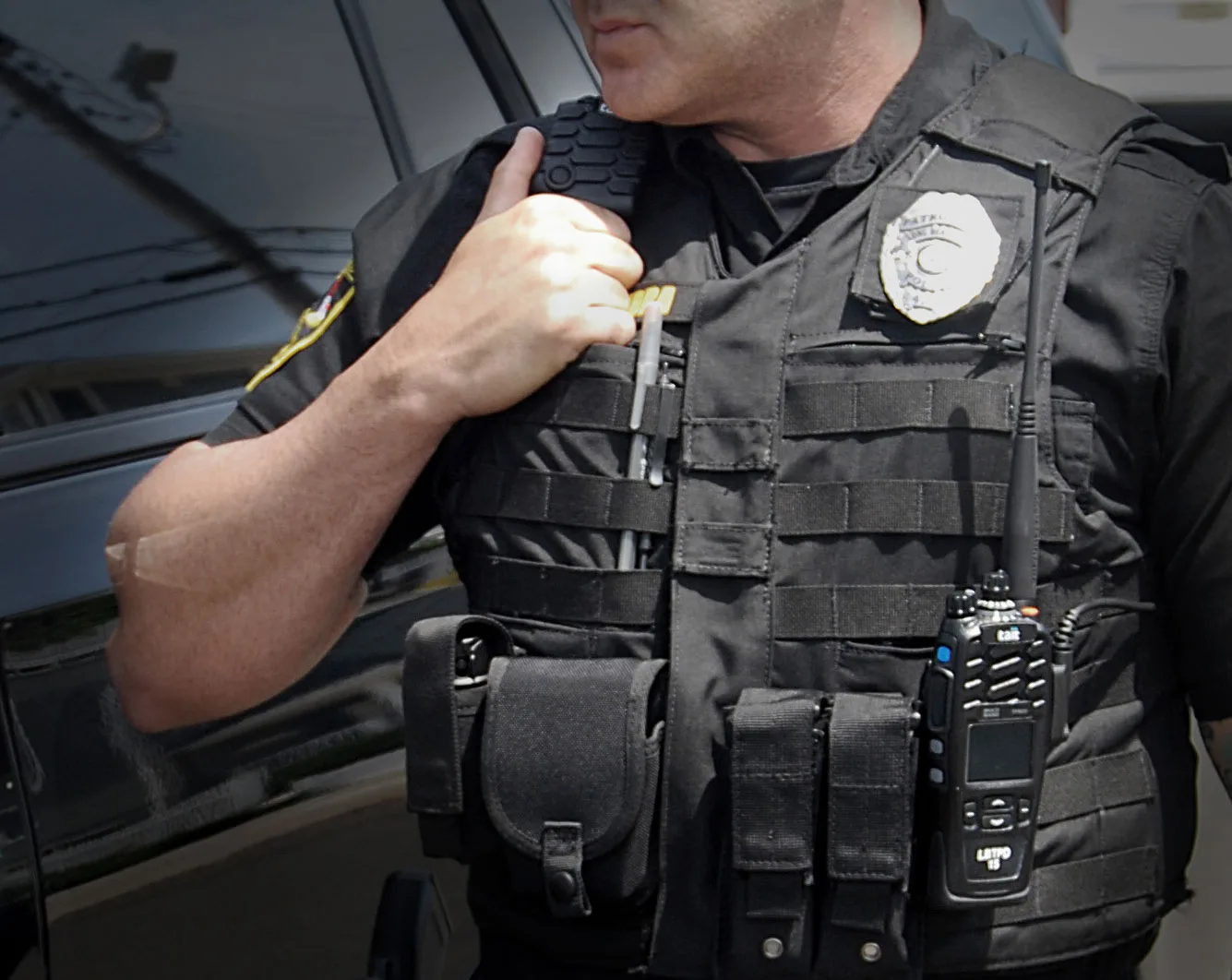
Why P25 Networks Are About More Than Just Radios
When most people think about Project 25 (P25), they picture rugged portable or mobile radios in the hands of first responders. But behind every successful transmission is a carefully engineered radio network infrastructure, the backbone that ensures reliability, coverage, and resilience when it matters most.
The truth is: the network matters as much as the radio.
Without properly designed base stations, repeaters, controllers, and simulcast systems, even the best portable radios will struggle with coverage gaps, interference, or congestion. That’s why agencies investing in Tait P25 infrastructure, and working with partners like PMC Wireless, gain not only equipment, but a system designed for resiliency and long-term value.
In this blog, we’ll explore:
- The anatomy of a P25 network (base stations, controllers, repeaters, simulcast).
- Why network design is as critical as the radio itself.
- Conventional vs. trunked vs. simulcast P25 networks.
- Benefits of redundancy and remote management.
- How PMC Wireless helps agencies engineer and migrate their networks.
Anatomy of a P25 Network
A P25 network includes multiple infrastructure components that connect handheld and mobile radios into a reliable communication system.
TB9400 Base Station
The Tait TB9400 base station is the cornerstone of many P25 networks.
- Multi-Mode Operation: Supports analog, P25 Phase 1 FDMA, and Phase 2 TDMA.
- Simulcast Capable: Provides synchronized coverage across multiple sites.
- Scalability: From a single-site conventional system to multi-site trunked networks.
- Remote Management: Web-based tools for monitoring and diagnostics.
- Resiliency: Built for mission-critical uptime with robust failover capabilities.
TN9400 Network Controller
- Manages trunked calls, talk groups, and roaming across sites.
- Provides intelligent routing for efficiency and interoperability.
- Ensures seamless call handover in trunked P25 networks.
Public Safety Radio Repeaters
- Extend coverage by receiving and retransmitting signals.
- Critical for large buildings, rural areas, and regions with challenging terrain.
- When paired with base stations, repeaters ensure end-to-end coverage.
Simulcast Systems
- Enable multiple base stations to transmit simultaneously on the same frequency.
- Essential for wide-area coverage without requiring multiple frequency allocations.
- Reduce interference and improve user experience in regional systems.
Together, these components form a resilient P25 infrastructure that scales to meet the needs of local, county, or statewide agencies.
Why Network Design Matters as Much as the Radio
Radios are only as good as the network they run on. Poorly designed infrastructure leads to:
- Coverage Gaps: Dead zones in stairwells, rural valleys, or city high-rises.
- Congestion: Insufficient channel capacity during emergencies.
- Interference: Overlapping signals causing audio distortion.
- Downtime: Lack of redundancy leading to outages.
A Strong P25 Network Should Deliver:
- Reliability: 24/7 availability, even during disasters.
- Scalability: Ability to add sites, channels, or features as needs grow.
- Security: Encrypted, interference-resistant communications.
- Flexibility: Support for both legacy analog and modern digital modes.
PMC Wireless works with agencies to design end-to-end network solutions, ensuring the infrastructure matches operational requirements, budget, and future migration paths.
Conventional vs. Trunked vs. Simulcast Networks
Agencies must choose the right network type based on geography, size, and operational needs.
Conventional P25 Networks
- How It Works: Users share fixed channels (one conversation per frequency).
- Advantages: Simple, cost-effective, interoperable with analog.
- Best For: Small towns, rural agencies, and utility operations.
Trunked P25 Networks
- How It Works: Calls are automatically assigned to free channels by the TN9400 controller.
- Advantages: Greater capacity, spectrum efficiency, dynamic call routing.
- Best For: Large cities, multi-agency regions, statewide systems.
Simulcast P25 Networks
- How It Works: Multiple base stations transmit on the same frequency, synchronized for seamless wide-area coverage.
- Advantages: Eliminates coverage gaps, maximizes efficiency of limited frequencies.
- Best For: Urban areas, regional cooperation zones, agencies with limited spectrum allocations.
Takeaway: The choice between conventional, trunked, and simulcast defines how reliable and scalable your communications will be. PMC Wireless guides agencies through these decisions to ensure future-proof performance.
Benefits of Redundancy and Remote Network Management
Mission-critical systems must work under all conditions, including disasters, outages, or equipment failures. That’s where resiliency comes in.
Redundancy
- Failover Base Stations: TB9400 systems can automatically switch to backup units.
- Multiple Power Sources: Redundant power supplies and battery backups.
- Geographic Redundancy: Distributed network controllers prevent single points of failure.
Remote Network Management
- Proactive Monitoring: Detect faults before they cause downtime.
- Web-Based Tools: Allow technicians to diagnose issues remotely.
- Reduced Downtime: Faster response times, fewer on-site service calls.
- Lower Lifecycle Costs: Preventive maintenance reduces total cost of ownership.
Result: Agencies gain peace of mind, knowing their P25 networks are monitored, redundant, and resilient.
PMC Wireless: A Tait Partner for System Engineering & Migration
Designing and deploying a resilient P25 network requires more than just hardware. It takes expertise, local knowledge, and ongoing support.
PMC Wireless Delivers:
- RF Coverage Studies: Identify current gaps and model solutions.
- System Engineering: Design networks that balance coverage, capacity, and budget.
- Migration Planning: Step-by-step paths from analog to P25 Phase 1 and Phase 2.
- Deployment: Install and integrate base stations, repeaters, and controllers.
- Maintenance & Monitoring: Ongoing service contracts to maximize uptime.
- Training & Support: Ensure users, IT teams, and dispatch centers are confident.
Why Choose PMC Wireless?
- Authorized Tait Partner: Access to the full line of TB9400 base stations, TN9400 controllers, and repeaters.
- Hands-On Experience: Decades of working with police, fire, EMS, utilities, and industrial clients.
- Scalable Solutions: From single-site coverage to statewide trunked networks.
- Future-Ready: Networks designed with Phase 2 and multiband interoperability in mind.
Conclusion: Building a Network That Works When It Matters
A resilient P25 network is more than just a set of radios it’s the infrastructure behind them. With TB9400 base stations, TN9400 controllers, repeaters, and simulcast systems, agencies can ensure reliable coverage, capacity, and redundancy.
- Conventional systems provide simplicity and cost-effectiveness.
- Trunked networks offer scalability and efficiency.
- Simulcast systems deliver wide-area reliability with limited spectrum.
- Redundancy and remote monitoring safeguard mission-critical performance.
At PMC Wireless, we help agencies design, deploy, and maintain P25 networks that protect lives, property, and infrastructure.
Contact PMC Wireless today to schedule a network consultation. Let’s build a P25 infrastructure that’s resilient, future-ready, and mission-critical.