Choosing the Right P25 System: A Buyer’s Guide for Agencies & Enterprises
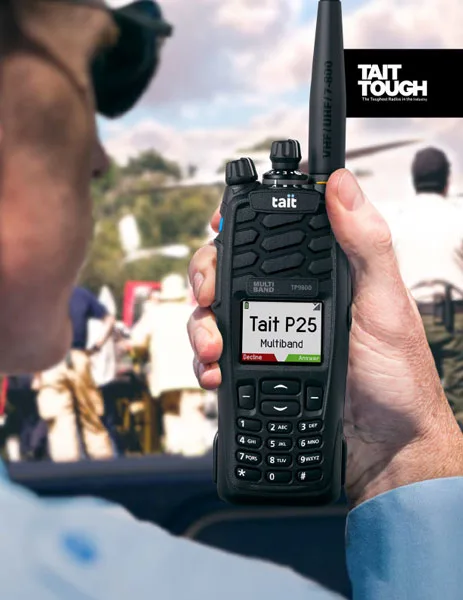
Why Choosing the Right P25 System Matters
For public safety agencies, utilities, and industrial enterprises, reliable communication is mission-critical. When first responders or field crews press the talk button, their radio systems must deliver no matter the conditions.
That is why Project 25 (P25) radio systems have become the standard across North America. They provide interoperability, digital clarity, and secure communications in environments where commercial cellular networks cannot be trusted.
But with so many options available, including different radios, infrastructure types, and frequency bands, choosing the right P25 system can feel overwhelming.
This P25 radio buying guide walks you through a practical checklist for evaluating radios and networks. From frequency bands and network types to safety features and lifecycle costs, this guide helps you make informed decisions. With PMC Wireless as your partner, you gain the expertise needed to design, install, and maintain a system that works when it matters most.
The P25 Procurement Checklist
When evaluating P25 systems, agencies and enterprises should consider six key factors.
1. Frequency Bands (VHF, UHF, 700/800 MHz)
The first decision is determining which frequency bands your radios need to support.
- VHF (136 to 174 MHz): Best for rural or wide-open areas. Offers excellent range and long-distance penetration. Common for utilities and rural fire departments.
- UHF (400 to 520 MHz): Provides a balance of coverage and building penetration. Ideal for mixed urban and rural environments.
- 700/800 MHz: Optimized for dense urban areas with strong in-building performance. Standard for large metro police, EMS, and fire agencies.
- Multiband radios (TP9800 and TP9900): Support multiple bands in a single device, enabling interoperability across jurisdictions.
Tip: Agencies that operate across jurisdictions or serve both rural and urban areas should consider multiband P25 radios to avoid communication barriers.
2. Conventional vs. Trunked Needs
Next, determine whether your agency needs a conventional, trunked, or simulcast system.
Conventional Systems
- One frequency supports one conversation at a time.
- Simple, cost-effective, and backward-compatible with analog systems.
- Best for smaller agencies or enterprises with modest channel needs.
Trunked Systems
- Use controllers such as the Tait TN9400 to assign calls to available frequencies.
- Offer greater capacity and efficiency for high-volume communication.
- Best for large cities, counties, or statewide deployments.
Simulcast Systems
- Multiple base stations transmit on the same frequency using synchronized timing.
- Efficient use of limited frequency resources.
- Best for agencies requiring regional or cross-county interoperability.
Tip: Avoid overbuying capacity. Work with PMC Wireless to map realistic traffic demands and plan for future growth.
3. Interoperability with Existing Systems
One of the greatest advantages of P25 standards is interoperability, but only when systems are designed correctly.
- Does your agency require interoperability across multiple frequency bands?
- Do you still rely on analog legacy systems?
- Do you collaborate with neighboring agencies using different P25 vendors?
Tait P25 radios support hybrid operation using analog and P25 digital modes. Radios such as the TP9900 also support P25, DMR, and analog, enabling seamless compatibility.
Tip: Interoperability should be a core requirement. Radios must work within your fleet and across mutual aid partners.
4. Safety Features That Protect Workers
P25 radios are more than communication tools. They serve as safety lifelines for personnel in the field.
- Man Down: Automatically sends alerts when tilt or inactivity is detected.
- Lone Worker: Triggers scheduled safety checks for isolated personnel.
- Emergency Button: Sends a priority alert with location details.
- GPS and location services: Enable real-time tracking during emergencies or large-scale operations.
Tip: Agencies with field-based personnel such as police officers, firefighters, linemen, or industrial technicians should prioritize radios with integrated safety features.
5. Budget and Lifecycle Costs
The initial cost of P25 radios and infrastructure represents only part of the total investment. Agencies should evaluate the total cost of ownership.
- Upfront costs including radios, base stations, repeaters, controllers, and licensing.
- Maintenance such as firmware updates, spare parts, and inspections.
- Training to ensure users can operate advanced features effectively.
- Scalability for adding channels, users, or sites.
- Longevity, with radios such as the Tait TP9400 and TP9600 built for extended service life.
Tip: Factor in the cost of downtime, failed inspections, or operational delays. Investing upfront in robust systems often reduces long-term expenses.
6. Real-World Considerations by Sector
Each sector has unique priorities when procuring P25 systems.
Public Safety (Police, Fire, EMS)
- Require multiband interoperability, encryption, and rugged construction.
- Radios must be waterproof, dustproof, and impact resistant.
Utilities (Energy, Telecom, Water)
- Need wide-area coverage across diverse terrain.
- Require rugged radios with GPS and Lone Worker capabilities.
Industrial and Transportation
- Prioritize durability and in-building signal penetration.
- Require secure communications to protect sensitive infrastructure.
Tip: Match procurement decisions to your operational environment. One-size-fits-all solutions rarely deliver optimal ROI.
PMC Wireless: More Than Just Radios
Choosing the right P25 system involves engineering, design, and long-term support, not just hardware selection.
How We Support Agencies and Enterprises
- Assessment including coverage surveys and interoperability studies.
- Design of conventional, trunked, or simulcast networks.
- Installation of TB9400 base stations, TN9400 controllers, and repeaters.
- Training focused on safety features, encryption, and hybrid operation.
- Maintenance programs to keep systems current and compliant.
- Migration planning from analog to Phase 1 and Phase 2 P25 systems.
As an authorized Tait Communications partner, PMC Wireless delivers resilient, secure, and mission-ready communication systems.
Conclusion: A Smarter Way to Buy P25 Radios
Choosing the right P25 system is a strategic investment in safety, compliance, and operational efficiency. The right solution will:
- Match your frequency needs across VHF, UHF, and 700/800 MHz.
- Align with your network type including conventional, trunked, or simulcast.
- Ensure interoperability with legacy and partner systems.
- Provide built-in safety features that protect personnel.
- Deliver predictable lifecycle costs and long-term ROI.
PMC Wireless helps agencies and enterprises navigate P25 procurement with confidence. From system evaluation to statewide network design, we deliver solutions that keep teams connected and safe.
Contact PMC Wireless today to schedule a consultation and build a P25 system that supports your mission, your budget, and your future.